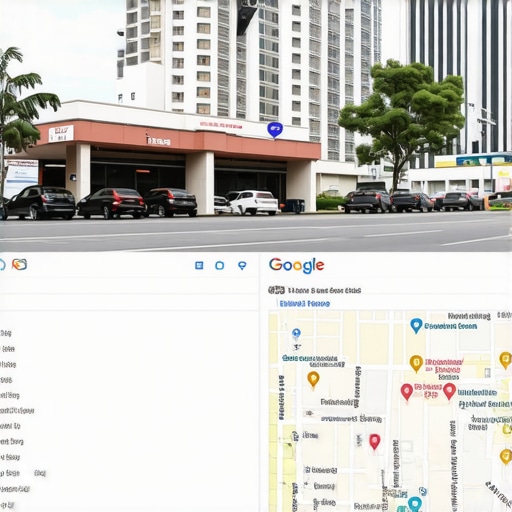
Why Georgetown Dental Practices Are Losing Patients to the Google Map Filter
In the heart of Washington, D.C., Georgetown stands as a beacon of prestige. From the historic cobblestones of M Street to the bustling professional corridors of Wisconsin Avenue, the neighborhood is home to some of the most elite dental practices in the country. Yet, a silent crisis is unfolding for many of these practitioners. Despite having five-star reputations, decades of experience, and state-of-the-art facilities, many Georgetown dentists are finding themselves invisible to the very patients walking right past their doors.
The culprit? The Google Map Filter. If you’ve ever wondered why your practice doesn’t appear in the coveted “3-Pack” when a patient searches for a “dentist near me” in 20007, you are likely a victim of Google’s deduplication algorithm. In a neighborhood as dense as Georgetown, where multiple dental offices often share the same historic building or office block, Google’s attempt to provide “variety” often results in your practice being hidden from view. This isn’t just a technical glitch; it is a direct hit to your bottom line. To stay competitive, understanding google business profile seo is no longer optional – it is a survival requirement.
The Georgetown Density Problem: What is the Google Map Filter?
Google’s primary goal is to provide the best possible user experience. When a user in Georgetown searches for a dentist, Google’s algorithm assumes that showing three different dentists located in the exact same professional building is a poor experience. To prevent this “monopoly” of a single location, Google applies a filter. It selects what it deems to be the most “relevant” or “prominent” business and hides the others behind a “Search again in this area” button or simply pushes them to the second page of results.
While proximity has traditionally been the #1 ranking factor in local search, Georgetown presents a unique challenge: over-proximity. When density is high, proximity loses its power as a tie-breaker. This is a common reason why your shop isn’t showing for ‘near me’ searches in DC. If your office is located at 1234 Wisconsin Ave NW and there are four other dentists in that same building, Google will likely only show one or two of you in the initial Map Pack. If you aren’t the one Google chooses, your digital “curb appeal” vanishes instantly.
The filter works by comparing several factors: your primary category, your physical address, and your “prominence” (a combination of reviews, backlinks, and website authority). If your profile looks too similar to your neighbor’s, the filter will trigger. Breaking this filter requires a sophisticated approach to google business profile optimization that emphasizes distinctiveness over mere presence.
5 Cardinal Errors Georgetown Dentists Make with Local SEO
Through years of auditing local search performance, we have identified five recurring mistakes that cause Georgetown dental practices to be filtered out of the Map Pack. Correcting these errors is the first step toward reclaiming your visibility.
1. Mismanaging Categories
Most practices simply set their primary category to “Dentist.” While accurate, it is the most competitive category in the city. If every office in your building uses “Dentist,” Google will filter based on other metrics where you might be lagging. By utilizing a google maps ranking service, you can analyze which categories your competitors are using and pivot. For example, if your neighbor is a “General Dentist,” you might find more success by leading with “Cosmetic Dentist” or “Dental Implants Periodontist” to de-conflict your profile.
2. Ignoring Practitioner Listings
In many Georgetown practices, individual dentists have their own Google Business Profiles alongside the practice’s main profile. While Google allows this, these profiles often compete with each other. If Dr. Smith’s personal profile is stronger than “Smith Dental Group,” Google may filter the practice profile in favor of the individual. This “cannibalization” is a silent killer of local seo for dentists.
3. NAP Inconsistency (The M St. Trap)
Georgetown addresses are notoriously complex. Is it “M St NW,” “M Street Northwest,” or “M Street, Suite 200”? If your address is listed differently on your website, your Facebook page, and your Google profile, Google loses confidence in your location. This lack of “location trust” makes you a prime candidate for the filter. We often see that mismatched address details are killing your Georgetown Map ranking, especially when suite numbers are omitted or formatted inconsistently across the web.
4. Neglecting Service Areas
Many dentists assume that because they are in Georgetown, they will automatically rank for Georgetown searches. However, Google needs to see that you serve specific micro-neighborhoods like Burleith, Glover Park, or Foxhall Crescent. Failing to define these service areas in your profile and on your website limits your “neighborhood-first” reach.
5. Static Profiles and Lack of Engagement
A “set it and forget it” mentality is fatal in 2026. If you aren’t regularly posting google business profile posts, responding to reviews within 24 hours, and uploading fresh, high-resolution photos, Google views your business as less “active” than the competitor down the street. High activity levels create “Signal Velocity,” which is a key factor in bypassing the proximity filter.
The 2026 Shift: AI Search and “Ask Maps” in Dental SEO
The landscape of local search has fundamentally changed with the integration of AI. Patients are no longer just typing “dentist near me” into a search bar. They are using “Ask Maps” (powered by Google Gemini) to perform complex, conversational queries. A patient might ask, “Which Georgetown dentist is best for anxious patients, offers evening appointments, and takes Cigna insurance?”
In this new era, rank google business profile strategies must move beyond keywords. Google’s AI now scrapes your reviews, your website content, and even the captions on your photos to find the answer. If your reviews frequently mention “painless” or “anxiety-free,” you will appear for those specific AI-driven queries even if you are filtered out of the general “dentist” search.
This shift prioritizes “Prominence” and “Relevance” over simple proximity. To win in 2026, your google business profile optimization must include a strategy for generating “semantic-rich” reviews. This means encouraging patients to mention specific services and experiences in their feedback. This conversational data acts as a bypass to the traditional Map Filter by proving to Google that your practice offers a unique value proposition that your neighbors do not.
Technical Fixes to “Unfilter” Your Practice
If you suspect your practice is currently being filtered, you need a technical roadmap to regain your position in the google map pack top 3. Here are the high-impact moves our team recommends:
- Category De-confliction: Conduct an audit of every dental practice within a 500-foot radius. If the dominant practice is using “Dentist,” change your primary category to your most profitable niche (e.g., “Dental Implants Periodontist”). You can still list “Dentist” as a secondary category, but changing the primary category often “unlinks” you from your competitor in Google’s eyes.
- Hyper-Local Brand Mentions: Google looks for digital signals that you are a pillar of the Georgetown community. Getting mentioned on local blogs like The Georgetowner or sponsoring events at Volta Park creates high-authority local backlinks that boost your “Prominence” score.
- The Map Embed Secret: This is a highly effective but often overlooked tactic. Don’t just embed a generic Google Map on your contact page. Embed a map that shows directions from a local landmark, like the Georgetown University gates, to your office. This technical “handshake” between your site and Google Maps confirms your precise location. For more details, see our guide on the map embed secret that proves your business is actually in DC.
- Signal Velocity: Increase the frequency of your updates. Aim for at least two Google Business Profile posts per week and upload 5-10 new photos monthly. This tells the algorithm that your business is more relevant to current searchers than a static profile.
By implementing these technical fixes, you provide Google with the data it needs to distinguish your practice from the “noise” of the surrounding density. You aren’t just another dentist on the map; you are a distinct, high-authority entity.
Why Real Photos Beat Stock Images in Georgetown
In a high-income market like Georgetown, patients are looking for luxury, cleanliness, and a personal connection. Using stock photos of people with perfect teeth is a major mistake. These images are easily recognized by both patients and Google’s AI as generic content.
Data shows that profiles with over 100 real photos receive significantly more clicks than those with fewer or stock-heavy galleries. Real photos of your waiting room, your advanced diagnostic equipment, and your smiling team build trust. Furthermore, Google’s vision AI can identify local landmarks in the background of your photos. If you take a photo of your team in front of your building with a recognizable Georgetown street sign or historic facade in the background, you are reinforcing your local relevance.
We’ve seen firsthand how Georgetown boutiques fixed their disappearing Google Maps pins by simply swapping out professional stock photography for authentic, locally-anchored imagery. For a dental practice, this means showing the reality of your high-end environment. High-quality, original imagery is a cornerstone of any successful google business profile seo strategy.
Conclusion: Reclaiming Your Map Position
The Google Map Filter is not a permanent penalty, but it is a sign that your practice lacks “distinctiveness” in the eyes of the algorithm. In the dense professional landscape of Georgetown, you cannot rely on proximity alone to bring in new patients. You must actively manage your digital presence to prove to Google – and to potential patients – that you are the premier choice in the neighborhood.
Reclaiming your spot in the google map pack top 3 requires a multi-faceted approach: correcting technical NAP errors, strategically choosing categories, and embracing the AI-driven shift toward conversational search. Don’t let your practice be hidden behind a “search again” button. It’s time to take control of your local visibility.
If you aren’t sure where you stand, your first step should be a comprehensive google business profile audit. Use professional local seo tools to track your “grid ranking” across different Georgetown zip codes. Seeing exactly where your visibility drops off – perhaps you rank #1 on M Street but disappear by the time someone searches from Wisconsin and N – will give you the roadmap you need to “unfilter” your practice and start winning back your local market.
The patients are searching. Make sure they can find you.