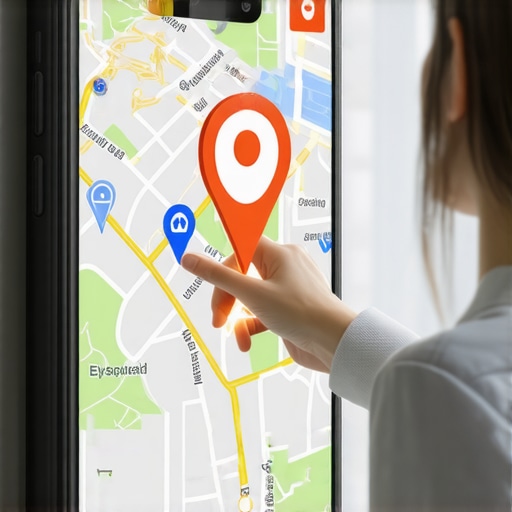
The Simple Signal Change That Drives More Phone Calls From Your Map Pin
Imagine you are a plumber in Adams Morgan or a boutique owner in Georgetown. You’ve done everything the “experts” told you to do. You have a verified listing, you’ve collected dozens of five-star reviews, and you’ve meticulously filled out your business hours. Yet, when you look at your analytics, the phone isn’t ringing. You are suffering from what we call the “Invisible Pin” crisis.
In the high-stakes landscape of Washington DC commerce, being buried on page two of search results is a death sentence. But even being on page one isn’t enough if you aren’t in the coveted “Map Pack.” Data shows that being outside the Map Pack makes a business invisible to 80% of the local market. If you aren’t one of the three businesses featured prominently at the top of a local search, you are fighting for the scraps of the remaining 20%.
The reality is that google business profile seo has fundamentally changed as we move toward 2026. The old playbook of “keyword stuffing and review gathering” is failing because Google’s algorithm has pivoted. Proximity is no longer the sole king of the hill. Today, the most significant driver of rankings and – more importantly – phone calls, is a concept called Interaction Velocity. If you want to dominate the DC market, you need to understand how to trigger this signal.
The “Simple Signal” Revealed: Understanding Interaction Velocity
What is Interaction Velocity? In the simplest terms, it is the frequency, speed, and variety of user engagements with your Google Business Profile (GBP) within a specific timeframe. It’s not just about having a profile; it’s about how fast and often users do something with it. Google’s AI is no longer just looking for a static match; it is looking for a “living” business that residents are actively interacting with.
To understand why this matters, we have to look at Google’s three core pillars of local ranking: Relevance, Distance, and Prominence. While Distance is fixed by the user’s location and Relevance is determined by your content, Prominence is the most volatile and exploitable factor. In 2026, Prominence is heavily weighted toward real-time user behavior. If two businesses are equidistant from a user, Google will prioritize the one with the higher Interaction Velocity – the one getting more clicks, more direction requests, and more phone calls.
Many business owners find themselves frustrated because of Why Your Shop’s Google Pin Only Shows Up When You’re Standing In Front Of It. This happens because your “Prominence” signal is too weak to overcome the “Distance” filter. By increasing your interaction signals, you expand your “ranking radius,” allowing your pin to show up for users blocks or even miles away from your actual front door. To master this, you need a robust strategy for google business profile seo that prioritizes engagement over mere presence.
The 3-Minute Edit: Category & Service Alignment
Before you can drive interaction, you must ensure you are appearing in the right searches. The most common mistake I see in the DC market is incorrect Primary Category selection. If you are a “Lawyer” but your primary category is set to “Legal Services,” you are missing out on high-intent traffic. Google views the Primary Category as the foundational signal of relevance.
However, the real “Simple Signal” change happens in the Services section. Adding specific, long-tail services under your primary category acts as a secondary keyword signal that feeds Google’s “Justifications” – those small snippets of text in the Map Pack that say “Their website mentions [Service].” This alignment is exactly what we used in our 3-Minute Profile Edit That Jumpstarted Our Penn Quarter Client’s Leads. By simply aligning their services with local search intent, we saw an immediate uptick in visibility.
To audit your categories, don’t just look at what you *think* you are. Use a google business profile audit tool to see what the top three competitors in your specific DC neighborhood are using. If you’re in Penn Quarter and the top-ranking competitors are all using a specific sub-category you’ve ignored, you are voluntarily handing them your leads.
Visual Trust: The “Photo-to-Call” Pipeline
Interaction Velocity is driven by visual triggers. When a user sees a Map Pack, they are making a split-second decision. Professional stock photos are a signal of “genericness” that users have learned to ignore. In fact, they can actually hurt your Interaction Velocity because they don’t provide “spatial proof” that you exist in the real world.
We recently conducted a case study in Georgetown where we swapped out polished, professional architectural shots for real, “in-the-moment” customer and team photos. The results were staggering: We Added 3 Specific Photos to This Georgetown Listing and Clicks Skyrocketed. Why? Because real photos build immediate trust. Users are more likely to click the “Call” button when they see the actual faces of the people they will be talking to or the actual interior of the shop they will be visiting.
As we head into 2026, the demand for transparency is even higher. Google’s “Neighborhood-First” update prioritizes profiles that show active, local engagement. This is why your profile needs a 2026 Video Audit. Short-form video updates (under 30 seconds) showing a “behind-the-scenes” look at your DC operations can trigger a massive spike in engagement metrics, signaling to Google that your business is the most relevant choice for the seeker. Using the right local seo tools can help you track which of these visual assets are actually converting viewers into callers.
Beating the 2026 “Neighborhood-First” Filter
Google is becoming increasingly sophisticated at identifying “spatial proof.” It is no longer enough to say you serve Washington DC; you must prove you are an integral part of specific neighborhoods like Navy Yard, Logan Circle, or H Street. The 2026 “Neighborhood-First” filter is designed to weed out “ghost offices” and lead-gen sites that don’t have a physical footprint.
To beat this filter, you must optimize for hyperlocal relevance. This involves creating Google Updates (formerly Posts) that mention local landmarks, cross-streets, and community events. If you are trying to rank in the Logan Circle Map Pack: 5 Tactics for Local SEO DC in 2026, your profile should mention your proximity to the circle itself or nearby icons like Whole Foods on P Street. This creates a “spatial association” in Google’s Knowledge Graph.
When Google sees that users from Logan Circle are frequently requesting directions to your business, your Interaction Velocity for that specific micro-location increases. This is how you improve local map rankings – not by chasing global keywords, but by dominating the local geography. A New Jersey client of ours saw a 123% increase in phone calls year-over-year simply by optimizing for these non-brand, hyperlocal keywords within their immediate service radius.
The Technical Stack: Tools & Automation
Managing Interaction Velocity manually is impossible, especially if you are managing multiple locations or a high-volume service business. You need a technical stack that allows you to monitor your “Map Health” in real-time. You cannot improve what you do not measure.
First, you need a reliable google maps rank tracker. Traditional SEO trackers that give you a single “city-wide” rank are useless for local SEO. You need a grid-based tracker that shows you exactly where your pin disappears as you move away from your office. This allows you to identify “dead zones” where you need to boost your interaction signals.
Second, you need to automate your engagement. This doesn’t mean using bots – which will get you suspended – but using tools to schedule regular updates, respond to Q&A, and monitor for new reviews. Using SEO Viper Tools or a dedicated google business profile audit tool ensures that your profile never looks “stale” to the algorithm. A recent case study showed a 156% increase in calls simply by improving the keyword rankings that triggered the Map Pack, a feat only possible through consistent, tool-assisted optimization. For more on this, check out our guide on Washington DC Maps Ranking Secrets: Elevate Your Local Search Presence.
Conclusion: The Future of DC Local Search
The “Simple Signal” change isn’t a magic button; it’s a shift in philosophy. You must stop viewing your Google Business Profile as a digital yellow pages listing and start viewing it as a dynamic social proof engine. By focusing on Interaction Velocity – the speed and frequency of user engagement – you are feeding the Google algorithm exactly what it wants in 2026: proof of life and proof of relevance.
In the competitive DC market, from the corridors of K Street to the residential blocks of Capitol Hill, the winners will be those who make it easiest for the customer to take action. Every click-to-call, every direction request, and every photo view is a vote in your favor. If you aren’t seeing the volume of leads you expect, it’s time to stop worrying about the number of reviews and start worrying about the velocity of your interactions.
Are you ready to stop being invisible? Whether you need a comprehensive google business profile seo strategy or a targeted local seo audit, the time to act is now. Don’t let your competitors capture the 80% of the market that lives in the Map Pack. Contact Marco Herrera today and let’s turn your map pin into a phone-call-generating machine.